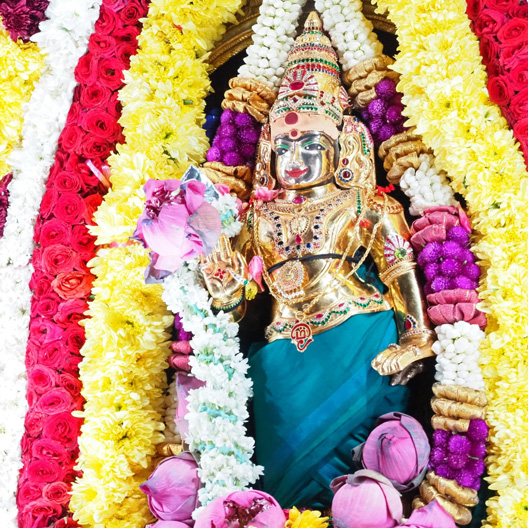
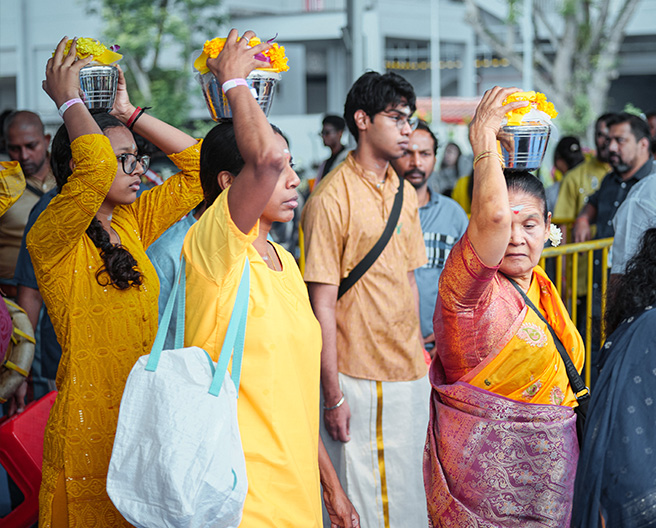
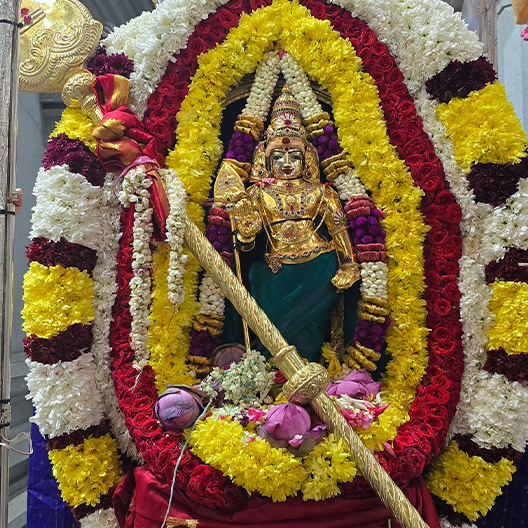
Panguni Uthiram is one of the most celebrated occasions in honour of Lord Murugan. Panguni is the twelfth and final month in the Tamil calendar, typically falling between mid-March and mid-April. It is considered an auspicious month, marked by vibrant festivals and spiritual significance. Panguni Uthiram falls on the day of the Uthiram star in Panguni month.
Panguni Uthiram highlights divine marriages, such as the union of Lord Shiva and Goddess Parvati, Lord Murugan and Goddess Deivanai, and Lord Ranganathan with Goddess Andal. It is a day for devotees to reaffirm their faith, perform rituals, and celebrate the sanctity of relationships.
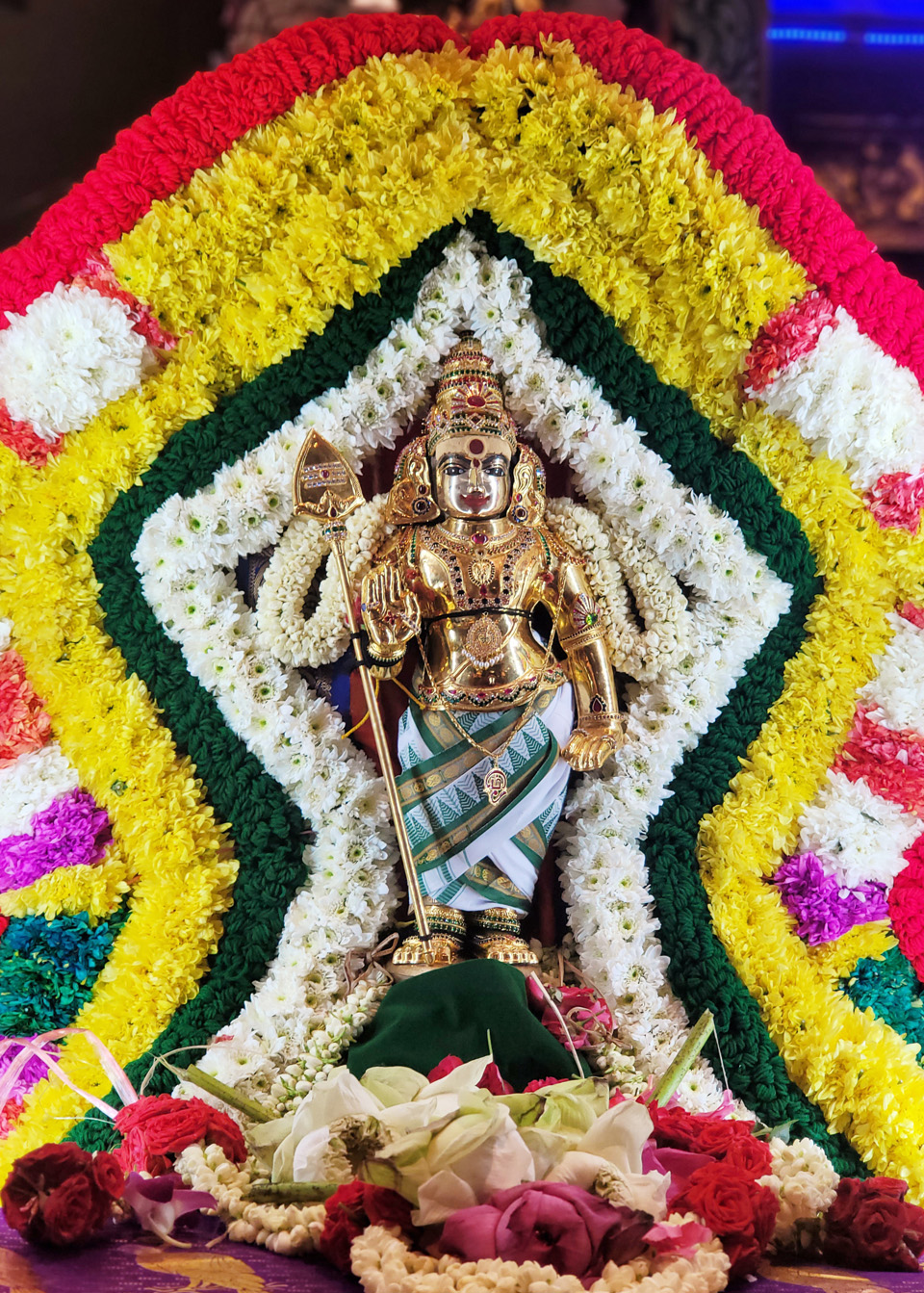
ORIGIN OF THE KAVADI
TRADITION
According to legend, the esteemed sage Agasthya who was once resting at Mount Pothikai, sent his disciple Idumban to the Mount Kailai Range with a special task: to retrieve two hills, known as Sivagiri and Shakthigiri, that belonged to Lord Murugan.
Idumban journeyed to Mount Kailai and successfully uprooted the two hills, binded them together and carried them over his shoulders. However, Lord Murugan had a different plan. He intended for the hills to be placed at Thiruvavinankudi (Palani) and wished to test Idumban’s dedication in the process.
While returning, Idumban found himself disoriented. In that moment, Lord Murugan appeared disguised as a regal figure on horseback, guiding him to Thiruvavinankudi and advising him to rest before continuing his journey. After this respite, Idumban attempted to resume his task, only to find that he could no longer lift the hills.
Perplexed, he noticed a young child, dressed only in a loincloth, perched atop one of the hills. When Idumban asked the child to descend, the child insisted the hills were his. In his frustration, Idumban tried to remove the child, only to be overpowered and brought down. It was then that he realized the child was none other than Lord Murugan himself, also revered as Subramanya.
Deeply repentant, Idumban asked for forgiveness and made a heartfelt request: that anyone who comes to worship Lord Murugan by offering an object resembling these two hills-balanced on a load-bearing pole-should have their heart’s desire fulfilled. His prayer was answered, and Lord Murugan further declared that all who present offerings such as sandalwood, milk, or flowers in a Kavadi to his shrine would be blessed. And so, the tradition of carrying a Kavadi was established.
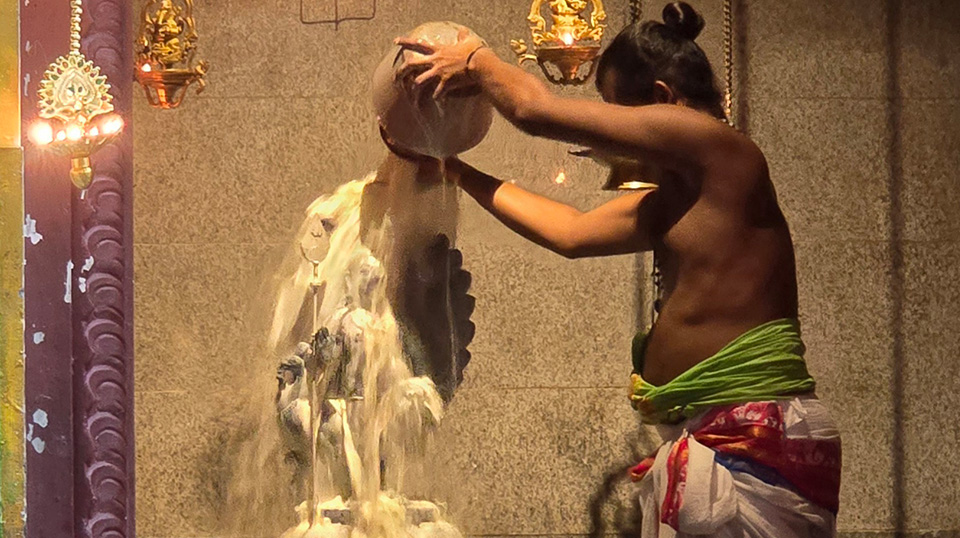
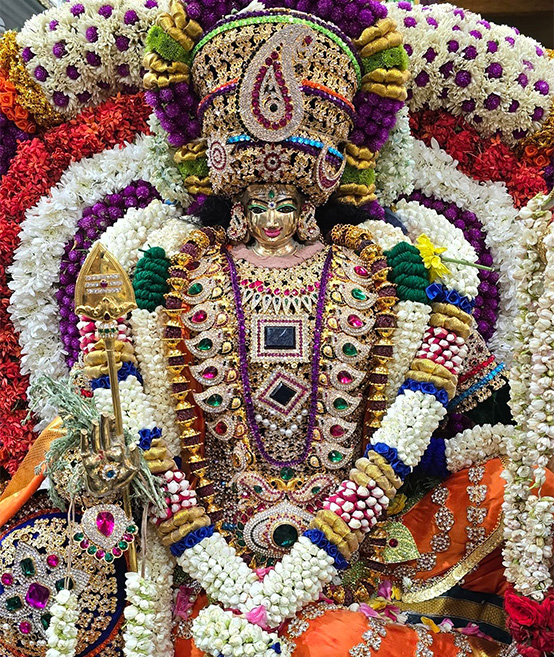
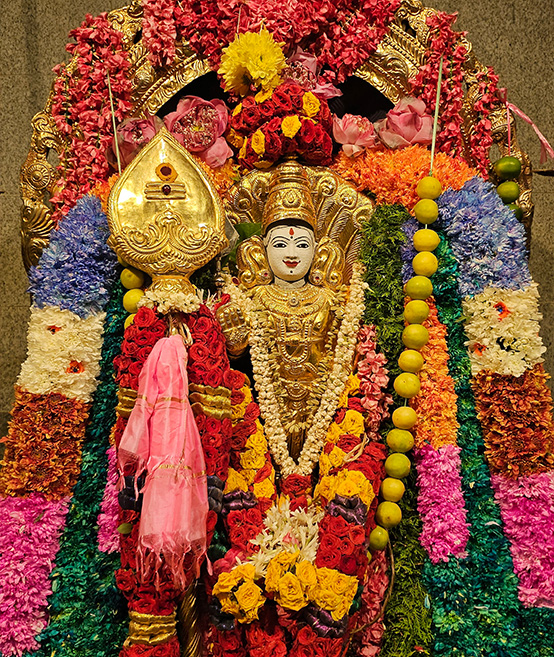
UNDERSTANDING THE
KAVADI
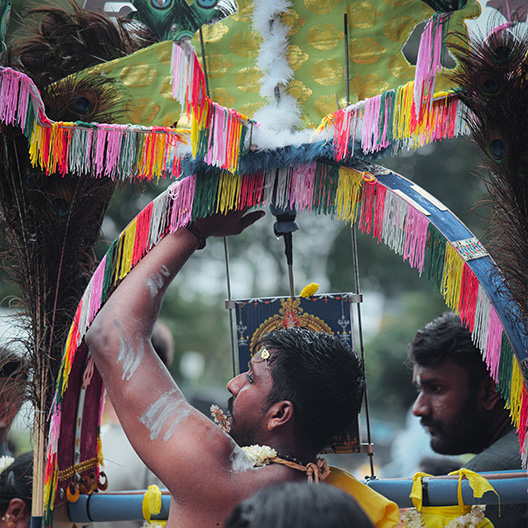
A basic Kavadi is composed of a short wooden pole topped with a wooden arch on which images or statues of Lord Murugan or other deities are mounted. The structure is typically decorated with peacock feathers, and small pots of milk are attached to each end of the pole.
There are also more intricate forms, such as the Alagu (Spike) and Ratha (Chariot) Kavadi, which are popular during Thaipusam and Panguni. These Kavadis are fastened to the carrier’s body using long, pointed rods, chains, or hooks. In essence, the Kavadi is not just an offering—it serves as a moving shrine that carries the divine presence.